Product owner vs product manager: who does what, and who your first app needs
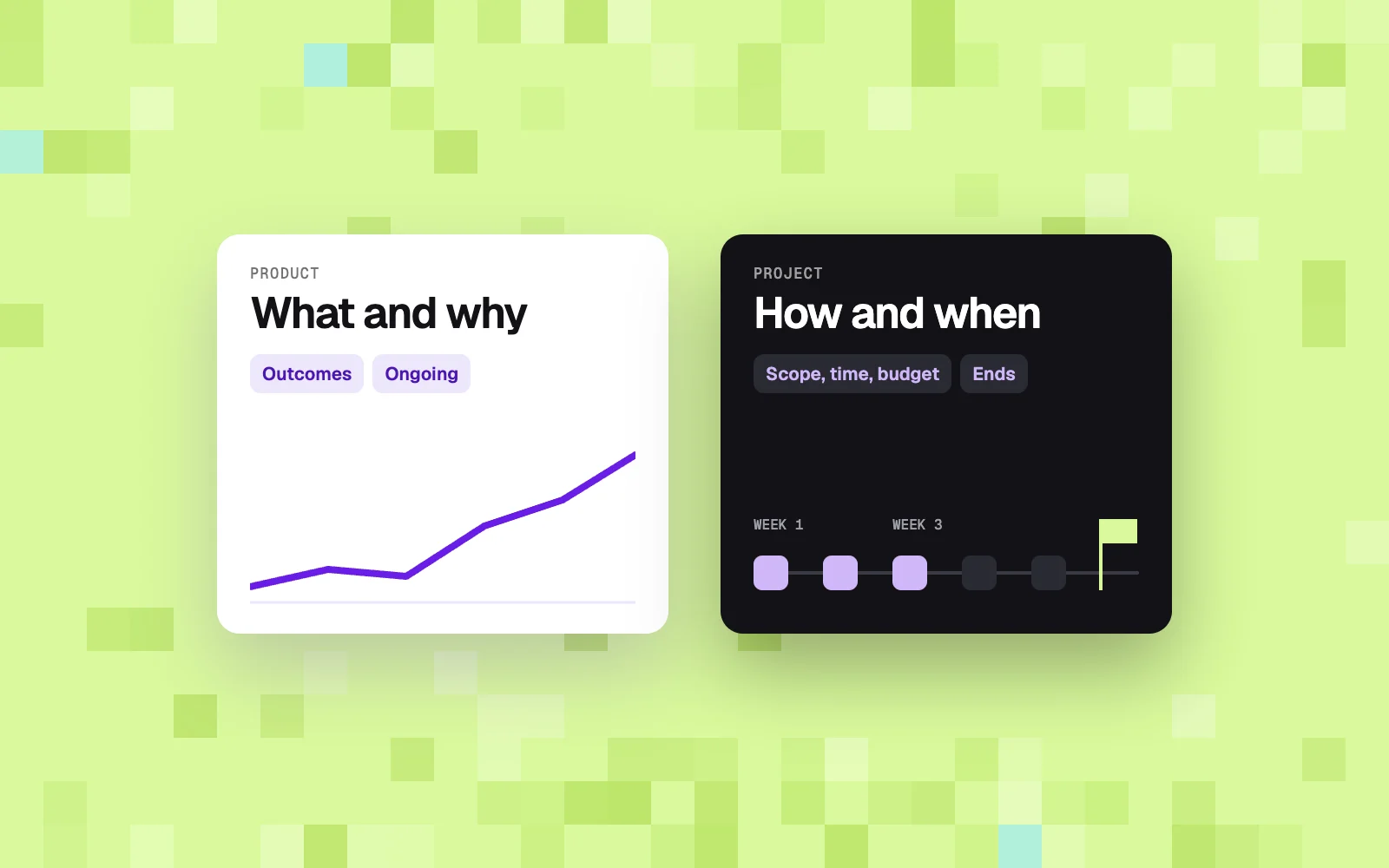
A product owner is the one person on a Scrum Team accountable for maximizing the value of the product and for the Product Backlog: the Product Goal, the backlog items and their order. A product manager is a broader role outside Scrum that covers the market, strategy, the business model and the product's whole life cycle. Large companies often split the work between two people. A small company building its first app usually needs one person who does both and has the authority to say no.
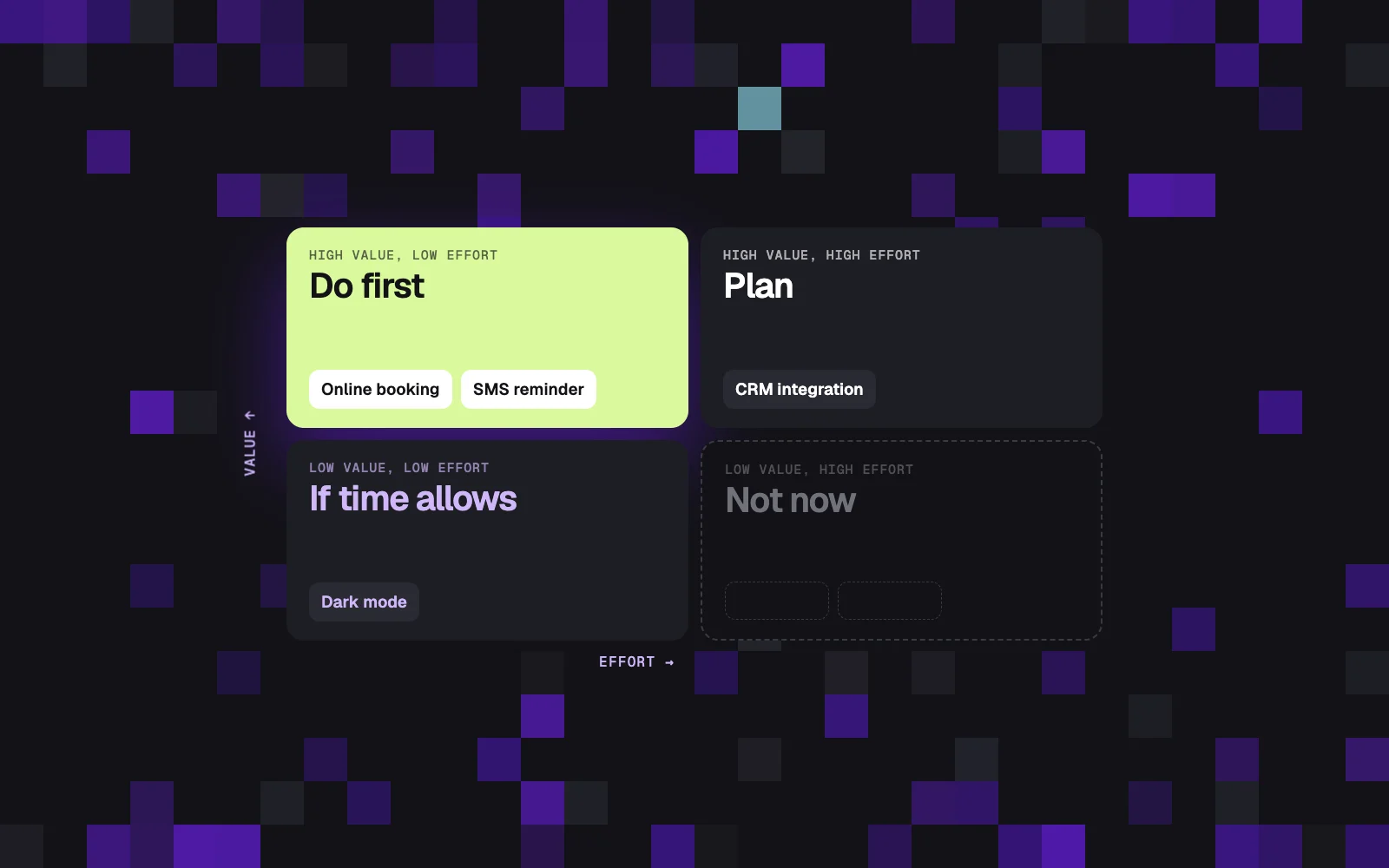
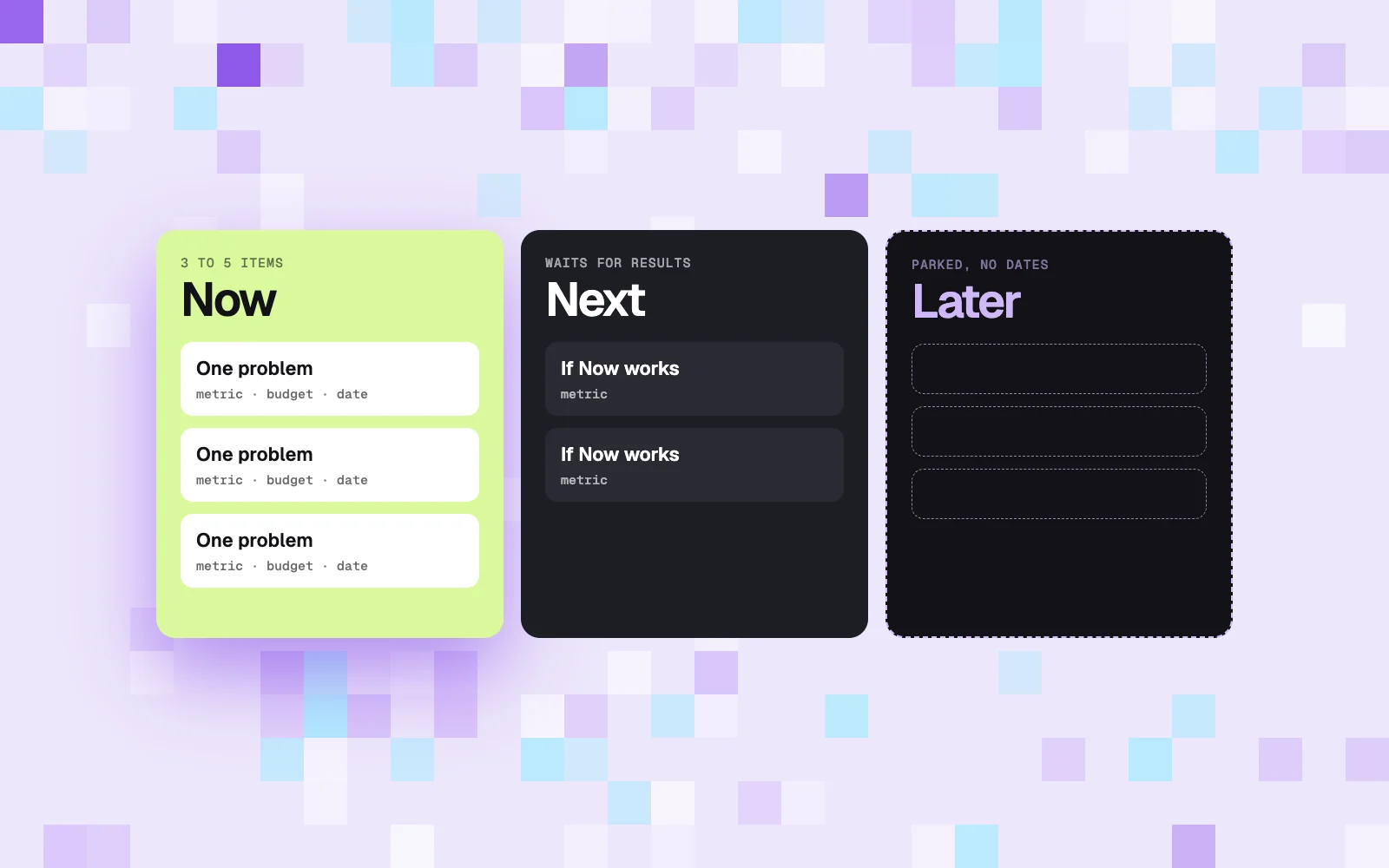
Product owner vs product manager comes down to scope. A product owner (PO) decides what the team builds next and why. In Scrum, a common way for software teams to work, the PO is accountable for the product's value and for the backlog, the ordered list of everything that might go into the product. A product manager does similar work more broadly and without tying it to any framework: the market, the strategy and whether the product makes money. Below: official definitions, comparison tables, certification costs, and an answer for a small company commissioning its first app.
I read the five pages that rank highest for this question in the US: Featurebase, Contentsquare, Scrum.org, Creately and ProductPlan. Four come from companies that sell product software, one lists salaries without a source, and none answers the business owner's question: who on my side should be the product owner when an outside team builds my first app.
We've been on both sides: founders who had to validate our own product ideas, and the team that designs and builds products for clients. Max Miskow co-founded Skillsbite (an AI tool for analyzing CVs) in 2021, then designed and built products for clients, and later built his own product, Podium, from scratch. On Podium, Max was his own product owner, as shown below.
What is a product owner
A product owner is the member of a Scrum Team who is accountable for maximizing the value of the product and for effective Product Backlog management. That is how the 2020 Scrum Guide, the official document by Scrum's creators Ken Schwaber and Jeff Sutherland, defines the role. The Guide lists what backlog management includes:
- developing and explicitly communicating the Product Goal;
- creating and clearly communicating Product Backlog items;
- ordering Product Backlog items;
- ensuring that the Product Backlog is transparent, visible and understood.
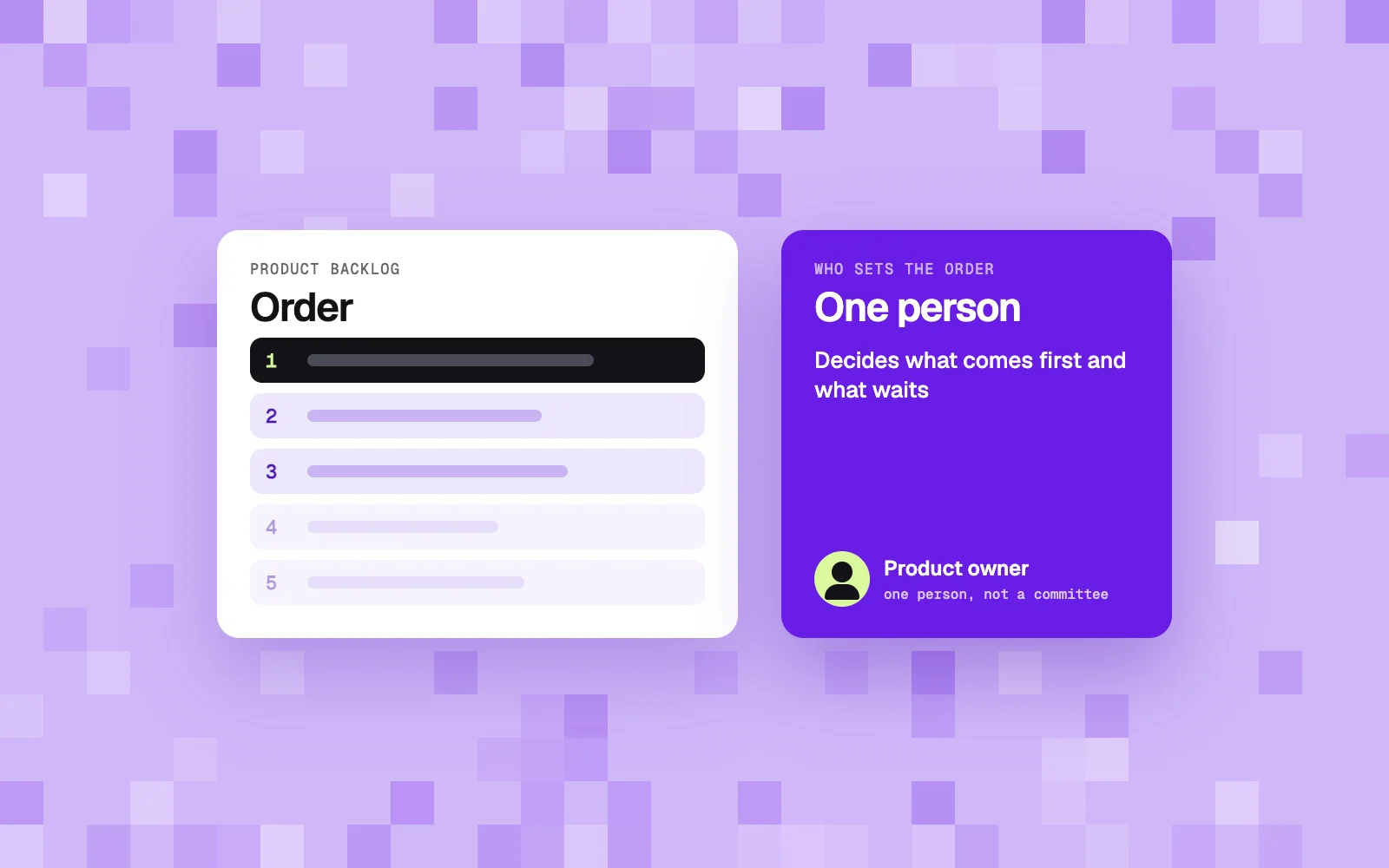
Two sentences in the Guide matter more than the rest. First: "The Product Owner is one person, not a committee." Second: for the PO to succeed, "the entire organization must respect their decisions," and anyone who wants to change the backlog has to convince the PO. The PO may delegate some of the work but stays accountable.
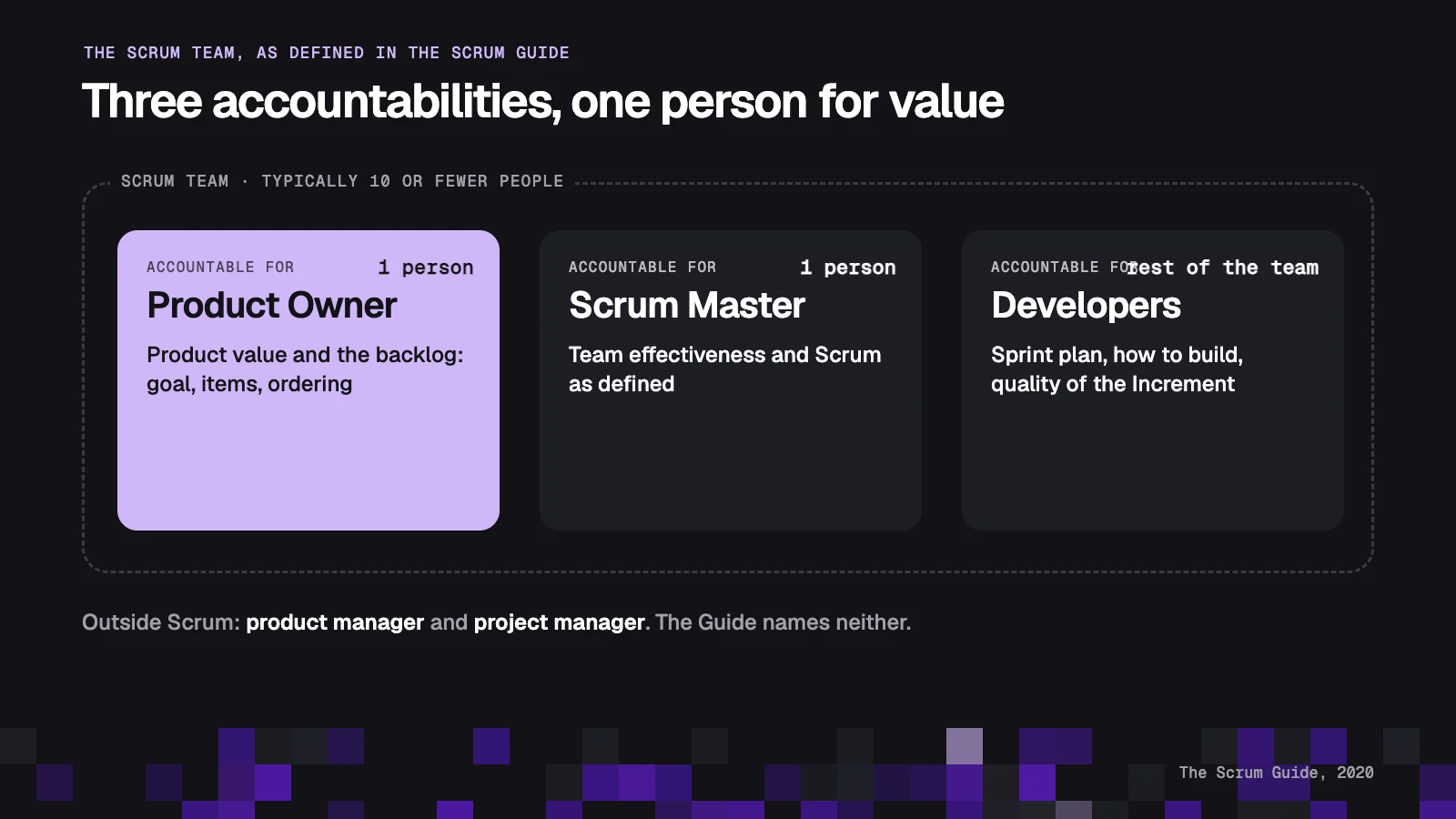
The Scrum Guide describes a Scrum Team as one Scrum Master, one Product Owner and Developers, typically 10 or fewer people. Scrum defines three accountabilities. It has no product manager and no project manager.
Mike Cohn of Mountain Goat Software, a Scrum trainer and author of books on agile methods, adds a boundary companies often forget. The product owner does not tell developers how to build the product, or how much work to take into a sprint. Developers decide that. The PO decides what comes first and what waits.
What is product management in simple words
Product management, in simple words, is deciding what a product should do, for whom and in what order, so that it solves a real problem and pays for itself. A product manager owns that work across the product's whole life: from understanding customers' problems, to deciding what to build, to checking whether it worked. Unlike the product owner, the role doesn't come from a framework and has no single official definition.
A typical product manager handles:
- the market and competition: who has the problem, how many people have it, how they solve it today;
- strategy and the business model: pricing, segment, the goal for the year;
- the roadmap, a plan of direction for the coming months;
- work with marketing, sales and customer support;
- measuring results after each release.
Atlassian puts the difference in one example: a product manager decides the product needs a new mobile experience, and the product owner works with the team to decide exactly which features it includes and in what order they get built.
Product owner vs product manager: the differences in a table
Product owner vs product manager is a question of scope, not of goal. Both roles want the product to deliver value. The product manager looks outside the company and further ahead, the PO works with the team on the next few sprints. The table compares both roles as official sources and company practice describe them.
| Product owner | Product manager | |
|---|---|---|
| Where the role comes from | Scrum (the Scrum Guide) | Product management, not tied to a framework |
| Accountable for | Product value and the team's backlog | The product's success in the market and the business |
| Time horizon | The next sprints and the Product Goal | Quarters and years |
| Works most with | Developers, daily | Customers, leadership, sales, marketing |
| Main artifacts | Product Backlog, Product Goal, acceptance criteria | Strategy, roadmap, market research, metrics |
| Typical decisions | What is first in the backlog, whether the Increment is ready | Who the product is for, which direction, at what price |
| How many per product | Exactly one (even with several teams) | One or several, depending on the company |
| Most common failure | Becomes a "backlog secretary" with no authority | Writes strategy and loses touch with the team |
Scrum.org, the organization founded by Scrum co-creator Ken Schwaber, warns about that first failure in its article on the two roles. When a company introduces a product manager and limits the PO's authority, the PO becomes a backlog administrator. According to Scrum.org, decisions then slow down, and teams deliver features efficiently but miss the mark on outcomes.
Part of the Scrum community goes further. In another post on Scrum.org, a trainer argues that the only difference is that the product owner runs product management through Scrum, while the product manager is not tied to Scrum. In many small companies, that is the honest answer: the same job in a different shirt.
Who decides what in an app project
Most project conflicts come from unclear decision rights. The table assigns typical app project decisions to roles; "business owner" means a company commissioning the app from an outside team.
| Decision | Product owner | Product manager | Developers | Scrum Master | Business owner |
|---|---|---|---|---|---|
| Why we build the product and for whom | shares | decides | advise | no | approves |
| Order of items in the backlog | decides | advises | advise | no | influences through the PO |
| How to build a feature technically | no | no | decide | no | no |
| How much work goes into a sprint | no | no | decide | helps | no |
| Whether the Increment meets acceptance criteria | decides | advises | share | no | no |
| Whether to release to customers | decides | shares | advise | no | approves big releases |
| Overall budget and deadline | advises | advises | estimate | no | decides |
| How the team improves its way of working | takes part | no | take part | leads | no |
In a small company, the product owner and product manager columns usually merge into one person. The business owner keeps the budget and the goal.
Product owner vs Scrum Master, project manager and other roles
The product owner owns what the team builds, the Scrum Master owns how the team works, and a project manager owns delivering a scope on time and on budget. The table lines them up with the other people a PO works with.
| Role | Main question | Part of Scrum | How they work with the PO |
|---|---|---|---|
| Product owner | What do we build first, and why? | Yes | |
| Scrum Master | Is the team working effectively with Scrum? | Yes | Helps the PO with backlog techniques and stakeholders |
| Developers | How do we build it, and how much fits in a sprint? | Yes | Ask about the goal, estimate, flag technical risks |
| Project manager | Will we deliver in scope, on time and on budget? | No | Plans schedule and budget around the backlog the PO sets |
| Product manager | Who is the product for, and where is it going? | No | Sets direction and strategy, the PO turns it into a backlog |
| Business analyst | Exactly how should the process work? | No (sometimes a Developer) | Writes up requirements the PO orders |
| Tech lead | What architecture, what technical risks? | No (is a Developer) | Tells the PO what is expensive, risky or cheap |
Product owner vs Scrum Master is the most common mix-up. The Scrum Guide keeps the accountabilities separate, and Atlassian describes the PO as leading on product vision and priorities while the Scrum Master leads the process. Our advice: don't combine the two in one person. The reason is practical: the person who sets priorities shouldn't also judge whether the team works well, because they have an interest in the team working faster.
Product owner vs project manager comes up in companies moving to Scrum. A traditional project manager fixes the scope at the start and guards it. A PO changes the order every sprint if new knowledge about customers calls for it. On a project for an outside client you usually need both views: someone who decides what matters most, and someone who watches the deadline and the invoices.
Three setups you'll see in companies
Companies combine these roles in three ways, each suited to a different team size.
| Setup | What it looks like | When it works | Main risk |
|---|---|---|---|
| One person, both roles | The same person researches the market, sets direction and runs the backlog | Startup, small company, one team, first version of a product | Too little time for customer conversations when sprints eat the day |
| Product manager and product owner side by side | The PM owns strategy and the market, the PO owns the backlog of one or two teams | A company with several teams and one product | A PO without authority becomes a backlog administrator |
| Product owner without a product manager | The PO does all the product work, as Scrum describes | A team working in Scrum with a strong, empowered PO | A PO from IT who doesn't know customers grows a backlog without a strategy |
Best product management certification for product owners: PSPO or CSPO
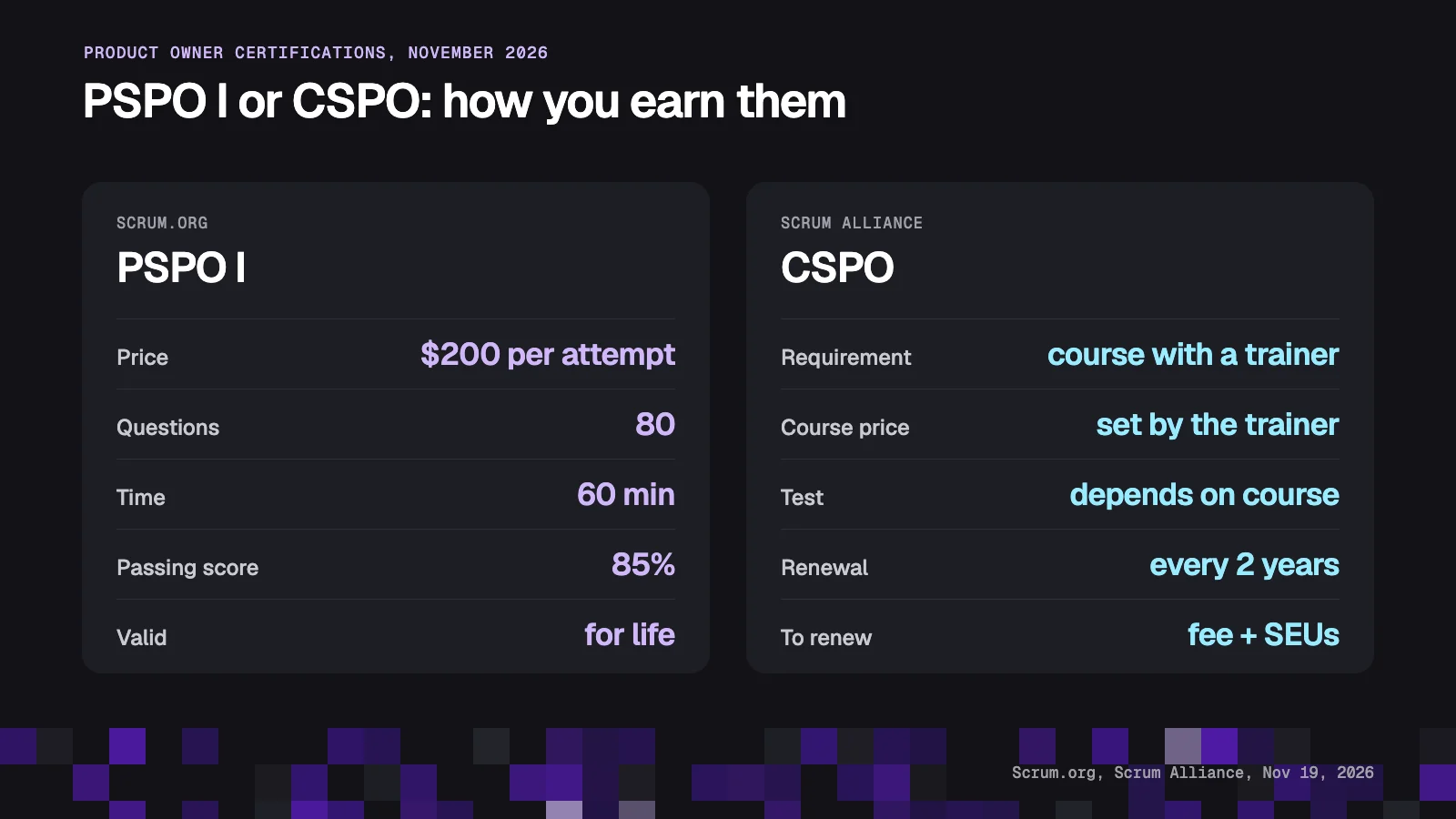
A product owner doesn't need a certificate, but job ads often list one: usually PSPO from Scrum.org or CSPO from Scrum Alliance. They differ mainly in how you earn them, as the table shows.
| PSPO I (Scrum.org) | CSPO (Scrum Alliance) | |
|---|---|---|
| How you earn it | Pass a test, course optional | Complete a course with a Scrum Alliance certified trainer |
| Price | $200 per test attempt | Set by the trainer, see the course directory |
| Test | 80 questions, 60 minutes, 85% to pass | Certification after the course, check terms with the trainer |
| Validity | For life, no annual renewal fee | Renew every 2 years: fee and SEUs |
| Course and test | A Scrum.org class includes a free test attempt | The course is the requirement |
| Best for | Someone who knows Scrum and wants to prove it in a test | Someone who prefers a workshop with a trainer |
Data from the official PSPO I page and the Scrum Alliance CSPO page, checked November 19, 2026. Scrum.org says plainly that, unlike certifications awarded for attending a class, its certification requires passing the test. An 85% passing score on 80 questions means at least 68 correct answers.
On its CSPO page, Scrum Alliance cites LinkedIn, which in 2020 ranked product owner 15th on its list of emerging jobs, with 24% annual growth. That data is six years old and comes via a professional body that sells courses, so read it as a signal, not a forecast.
For a business owner looking for a product owner for a first app, a certificate says little. It says someone knows the rules of Scrum. It doesn't say whether they can say no to a client, or whether they understand your industry. As for how to learn product management without a course: own a small backlog for real and read the Scrum Guide, which runs under 13 pages.
Who a small company building its first app needs
A small company building its first app with an outside team needs one person with authority over the order of work, not a separate product owner and product manager. That person can sit at the company or at the vendor, but there has to be exactly one.
In our experience the split is simple: the business owner knows the customers and decides on money, the vendor knows the cost of each feature and turns a goal into a backlog. The worst setup is one where nobody has the last word on order: the owner sends a wish list, developers build a bit of everything, and the first version never ships.
On client projects Max takes the product side: conversations, validating the idea, the scope of the first version and the backlog. When the project needs it, a trusted developer joins for the technical side. The MVP rhythm looks like this:
- Week 1, diagnosis. The product goal in one sentence and a short list of features for the first version. Everything else goes to the bottom of the backlog.
- Week 2, a prototype on the client's data. The business owner sees a working draft and changes the order before much code exists.
- Weeks 3–6, build. Short stages, with a decision about what's next after each one.
Pricing works like the backlog: a range after the first call, and a fixed price before each stage. That way every decision about order is also a decision about money, not an abstract list. How the product roadmap backlog link works on a real example is in our product roadmap guide. See also custom app for a small business and the MVP section of the home page.
An example from the US market, without the company's name: a business that runs several home services wants one app where a customer can book any of them, track visits and keep their home's service history. Part of the data lives in Jobber, which the company already uses. The key product owner decision on a project like this comes first: which service and which customer step go into the first version, and what waits. The Jobber integration is a precondition. The history of photos and invoices can wait for the second stage.
The table helps you pick a setup for your situation.
| Your situation | Who should be the product owner | What to watch |
|---|---|---|
| The owner has time every week and knows the customers | The business owner, with the vendor's help on the backlog | That they don't add features mid-stage |
| The owner has no time but has a trusted manager | That manager, with decision rights in writing | That the owner doesn't overrule them on the side |
| Nobody in the company has time | The vendor as PO, the owner approves the goal and each stage | That the vendor decides order, not the goal |
| Several partners with different ideas | One person the partners choose | That the backlog doesn't become a merge of three lists |
Example: being the product owner of your own product with Podium
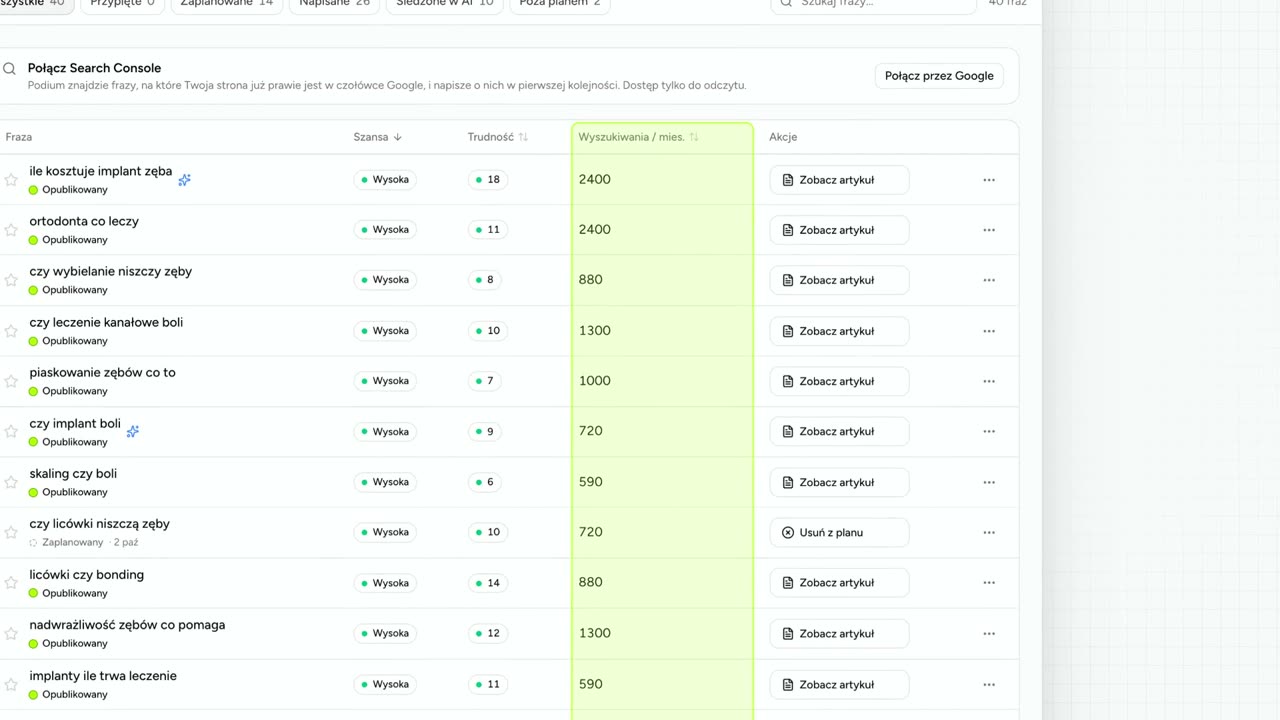
Podium is a tool Max built from scratch: it researches keywords, checks whether a brand appears in AI assistants' answers, and writes articles. On Podium, Max was product owner, product manager and the person paying all at once, so every backlog decision was immediately a decision about cost.
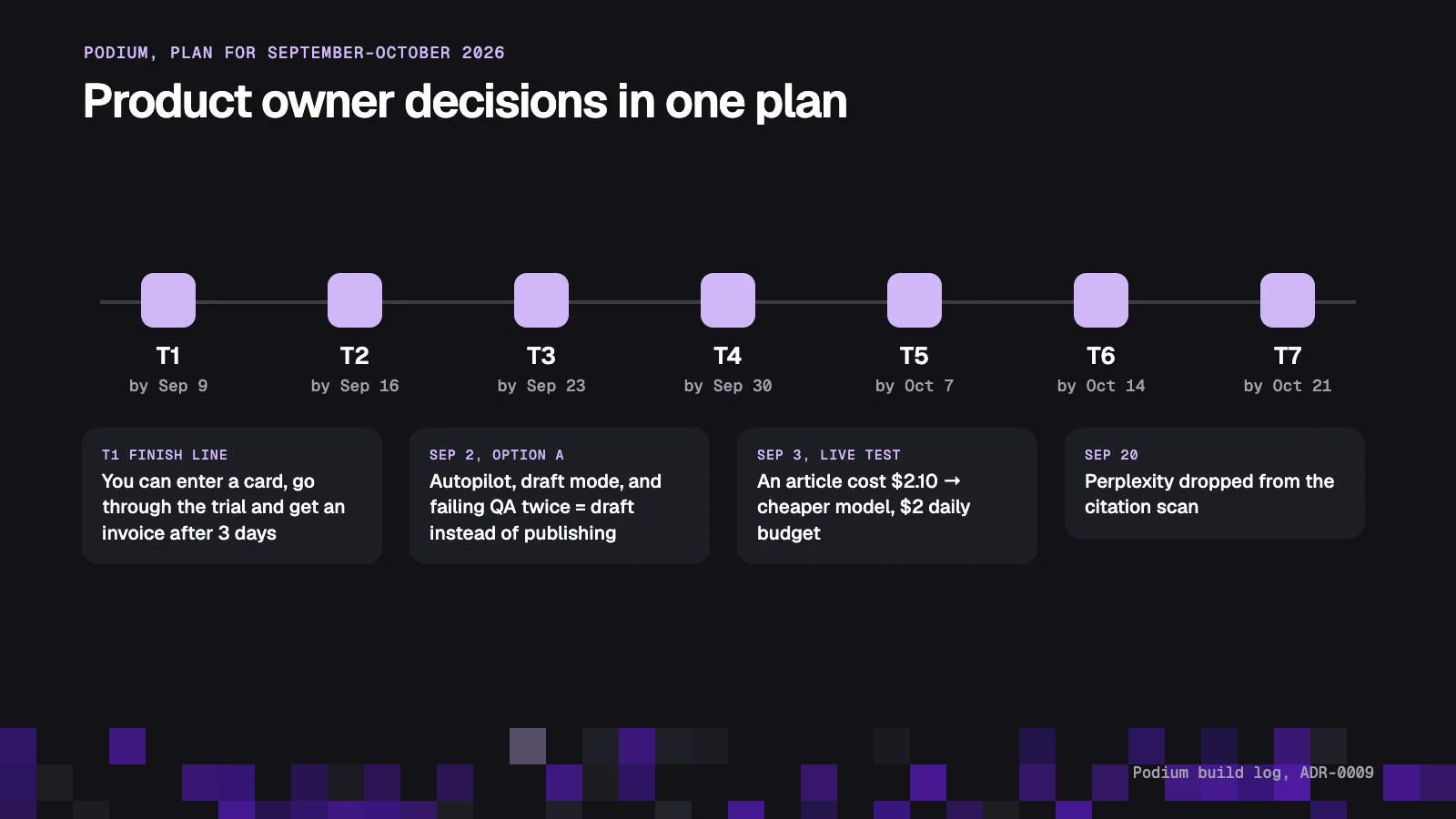
A few decisions from the build log show product owner work in practice:
- Dated stages with one finish line. The plan had weekly stages from T1 (by September 9) to T7 (by October 21). The T1 finish line was written as one sentence: you can enter a card, go through the trial and get an invoice after 3 days. That is an acceptance criterion, not a task list.
- A decision before T4 (September 2), option A. After researching competitors, Max picked autopilot as the default mode, draft mode as a control and a quality gate: an article that fails QA twice stays a draft instead of being published.
- A deliberate "not yet". Product analytics was skipped at launch, because the event log in the database was enough for the first decisions.
- Reordering after a test. The first article in the live test on September 3 cost $2.10 on the more expensive model. The default model was switched to a cheaper one, and each site got a $2 daily budget. On September 20, Perplexity was dropped from the citation scan.
Each decision changed the backlog: something moved up, something down, something dropped out.
Checklist: does your project have a real product owner
Answer yes or no to each line. Three or more noes mean your project has someone who keeps the backlog, but no product owner.
- You know who has the last word on the order of work, and it is one person.
- The product goal fits in one sentence, and the team knows that sentence.
- The backlog is ordered from first to last, with no ten items marked "highest priority".
- The product owner talks to customers or users at least once a month.
- The PO is available to developers during the day when they have a question.
- Every item in the next sprint has acceptance criteria.
- The PO can say no to the business owner and has the right to.
- The PO doesn't assign tasks to developers or tell them how to code.
- After every release, someone checks whether it changed anything for customers.
- Change requests reach the backlog through the PO, not straight to developers.
Line 3 is the fastest test. As Mike Cohn notes, only ordering forces tradeoffs: something is first, and something else waits.
Product owner jobs: reading a job ad
Product owner jobs appear where a company has its own development team working in Scrum, but the same work gets posted under different titles. Scrum.org stresses that companies define the two roles differently depending on size, industry and structure.
So when you read a job ad, look at the duties, not the title. If it talks about the backlog, sprints and one team, it is product owner work. If it talks about the market, pricing, strategy and several teams, it is product manager work. If it talks about deadlines, budgets and schedules, it is project manager work, whatever the title says.
To check which setup fits your company, start with a free report with ideas for your company or a 30-minute call.
Frequently asked questions
Is a product owner the same as a product manager?
No, although in small companies it is often the same person. The product owner is a Scrum role accountable for the product's value and one team's backlog. The product manager is a broader role outside Scrum: the market, strategy, the business model and the product's whole life cycle. Scrum.org notes that companies define both roles differently.
What is a product owner in simple terms?
A product owner is the one person who decides what a software team builds first and why. In Scrum they are accountable for the product's value and for the Product Backlog: the Product Goal, the items and their order. Developers decide how to build it.
Can a product owner also be the Scrum Master?
The Scrum Guide describes them as two separate accountabilities, and in our experience they work better apart. The product owner sets priorities, and the Scrum Master makes sure the team works effectively. One person in both roles has an interest in the team working faster rather than better.
How many product owners can one product have?
One. The Scrum Guide says plainly that the product owner is one person, not a committee. Even when several Scrum Teams work on one product, they share one Product Goal, one Product Backlog and one product owner.
Who should be the product owner in a small company commissioning an app?
The person who has time for decisions every week and the right to say no. It can be the business owner, a trusted manager, or the vendor, as long as the owner approves the goal and each stage. What matters most is that it is one person, not several partners with separate lists.
Which product owner certification should I choose, PSPO or CSPO?
PSPO I from Scrum.org costs $200 per test attempt (80 questions, 60 minutes, 85% to pass) and lasts for life. CSPO from Scrum Alliance is earned through a course with a trainer and renewed every 2 years. Choose PSPO if you know Scrum and want a test, CSPO if you prefer a workshop.
Does a product owner need to know how to code?
No. The product owner decides what to build and in what order, and developers decide how to build it. It helps to understand what is technically expensive, but customer conversations, clear acceptance criteria and the nerve to push features to later matter more.